 kNaru
kNaru0online
The countless punctuation marks we use for writing and speaking, like exclamation points, question marks, commas, and periods, have been around for ages, with some dating back to ancient times (periods, colons, commas) and others invented and in use by the Renaissance. However, with the goal of expressing human nuances more precisely, many punctuation marks have emerged even in recent times, and some have come very close to actual use. Here are some of the most representative ones. (I've taken some liberties with Korean names).
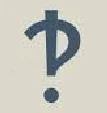
1. Interrobang, Exclamation-Question Mark - Interrobang This symbol, simply combining an exclamation mark and a question mark, was created relatively recently in 1962 by an American advertiser named Martin K. Speckter. The cool-sounding name 'Interrobang' is a portmanteau of 'interrogatio' (Latin for 'question') and 'bang' (slang for 'exclamation mark'). It was actually used quite a bit back then, probably because, unlike some of the other symbols that came later, you could just type an exclamation mark and a question mark twice on a typewriter. It's the most successful of the proposed symbols, even getting assigned a Unicode character.

2. Sarcmark, Snark Mark - Sarcmark This symbol was created in 2006 by the American Sak brothers. It's meant to express sarcasm and irony, and they even founded a company called Sarcasm to sell merchandise. But the ironic twist is that you have to pay to use this punctuation mark due to copyright, which is truly living up to their company name.

If you want, you can buy stuff like this from their website.

3. Hervé Bazin's 6 Emotional Punctuation Marks In 1966, French writer Hervé Bazin proposed the following 6 punctuation marks to express emotions: - Sarcastic Mark: Used for sarcasm, irony, etc. (similar usage to the Sarcmark above, ㅇㅇ) - Loving Mark: Used for love, affection, etc. - Believing Mark: Used for certainty and affirmation. - Commanding Mark: Used for commands, warnings, instructions, etc. - Joyful Mark: Used for joy or celebration. - Doubting Mark: Used for doubt or skepticism.
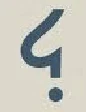
4. El Ley, Gentle Exclamation Mark - El Rey In 2013, photographer Ellen Susan invented this symbol, arguing that the existing exclamation mark was used for both "Watch out!" or "Yay!" (commands, exclamations) and lighter emphases like "Thanks!". She proposed 'El Rey' for the latter purpose of moderate emphasis. But honestly, I don't quite get what she's saying as I write this, and even the inventor barely uses it, so it's pretty much forgotten.

5. Rhetorical Question Mark - Rhetorical Question Mark Unlike the previous symbols, this one was created in 16th-century England. 'Rhetorical question mark' sounds fancy, but it's simply a mark used for questions that don't require an answer.

(It's easy to think of it being used in situations like this) It was used to some extent until the 17th century, but it disappeared afterward, possibly due to the efficiency of typefaces. The lack of standardization is also probably because it was an early symbol.
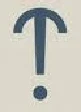
6. Friendly Period - Friendly Period The friendly period was proposed in the era of social media. In Korea, there's a trend of not using periods at all, but in English-speaking cultures, it can be hard to understand texts without a period, making it almost essential when sending messages. But maybe English speakers also felt that ending a sentence with a period seemed a bit distant, so this friendly period was created and proposed. I searched for a while but couldn't find who created it, so I don't know..

7. Snark Mark, Mockery Mark - Snark Mark The snark mark was invented in 2007 by American typographer Chaz P. Cunningham. Its usage is almost identical to the aforementioned sarcasm marks, but it's used for more biting or sarcastic expressions.

Conclusion: Why Did They All Die Out?

(Sharingan mark, wow ㄷㄷ) Besides the ones listed above, many other marks have been created, and even now, countless symbols like the childish ones above are being made, but none of them are widely used.
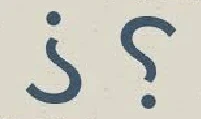
It might be due to path dependency on existing symbols, but I think it's mainly because emojis can solve everything, so there's no need to create new punctuation marks.

(My own 'Femko Mark'. Still thinking about how to use it) Just read this for fun, and if you're bored, why not try creating your own punctuation marks? Thanks for reading this long post!

6. 친근마침표 - Friendly Period 친근마침표는 SNS 시대에 제안된 기호입니다. 한국은 그냥 마침표를 안 쓰는 추세지만 영어권은 마침표가 없으면 독해가 힘들어지기 때문에 문자를 보낼 때 마침표가 반 필수이다. 하지만 뭔가 마침표를 찍으면 서먹해보이는건 영어권 화자들도 느끼는 감정이었던건지 위의 친근마침표를 만들어 사용하자 제안했던 것이다. 근데 누가 만들었는지는 지금 한참 찾았는데도 안 보여서 모르겠음..

7. 스나크 마크, 조롱표 - Snark Mark 스나크 마크는 2007년에 미국의 타이포그래퍼 커닝햄이 발명했습니다. 사용처는 위에서 나온 빈정표들과 거의 일치하지만, 좀 더 독설적인 부분에서 사용한다는 차이점이 있다.
결론: 왜 전부 사장되었는가?

(사륜안표 ㄷㄷ) 위의 것들 외에도 정말 많은 기호들이 만들어졌고 지금도 위의 개초딩 기호처럼 수많은 기호들이 만들어지고 있지만 널리 쓰이는 건 단 하나도 없다.

아마 쓰던 기호만 쓰는 경로 의존성의 이유도 있겠지만, 내 생각에는 그냥 이모지를 쓰면 전부 해결되는 부분이라 문장 부호를 만들 필요가 없기 때문이지 않나 싶다.
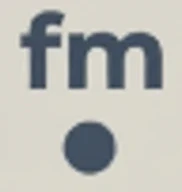
(내가 만든 펨코표. 사용처는 아직 고민 중) 글은 그냥 흥미로만 보시고 심심하면 자신만의 문장 부호 만들어보는 건 어떨까 싶다. 긴 글 읽어 주셔서 감사합니다
"People are sharing their thoughts on the proposed punctuation, from its humor to its practicality, and even suggesting uses for the author's own created mark!"
#FunNo comments yet.